
A Cut-To-Length (CTL) Line — commonly referred to as an Automatic CTL Line — is a highly integrated metal processing system designed to uncoil a master steel or aluminum coil, flatten it to precise dimensional tolerances, and cut it into flat blanks of a predetermined length. Unlike manual or semi-automatic processes, a fully automatic CTL line manages every stage of production — decoiling, leveling, feeding, measuring, shearing, and stacking — through a centralized control system, typically a PLC or CNC-based platform.
The concept emerged from the need to eliminate manual handling error in sheet metal fabrication and to serve downstream industries that require consistently flat, precisely dimensioned sheets. Today, the Cut-To-Length Line is considered a foundational asset in any modern metal service center or manufacturing plant that processes coil-fed materials.
Understanding the specifications of a CTL line is essential when specifying a system for a given production application. The following table summarizes the benchmark technical parameters of SUMIKURA's medium-duty Automatic CTL Line, as published on their product page:
| Parameter | Specification | Engineering Note |
|---|---|---|
| Material | HSS / CRS / Aluminum | High-Strength Steel, Cold-Rolled Steel, and Aluminum alloys — covering the majority of industrial sheet metals |
| Processing Width | 150 – 800 mm | Suited for narrow strip to medium-width coil; ideal for appliance and auto component producers |
| Cut Length Range | 300 – 2,000 mm | Wide range accommodates diverse blank sizes without tooling changeover |
| Coil Weight Capacity | Up to 15 Tons | Heavy-duty mandrel and decoiler hydraulics required; motorized uncoiling recommended |
| Material Thickness | 0.4 – 4.0 mm | Broad gauge range handled by a multi-roll leveler with adjustable roll pitch and pressure |
| Line Speed | 0 – 80 m/min | Variable speed AC drive allows precise synchronization between feeding and shearing |
| Shear Type | Rotary Shear | Continuous shearing without stopping the material flow; superior to guillotine for high-speed applications |
An automatic CTL line is not a single machine — it is a precisely sequenced train of mechanical and electronic subsystems. Each component plays a critical role in achieving the flatness, dimensional accuracy, and throughput required by modern manufacturing.
The motorized decoiler holds the master coil on an expanding hydraulic mandrel. It feeds strip material at a controlled rate using a servo-driven motor that maintains consistent back-tension, preventing strip loosening or coil collapse. For coils up to 15 tons, the mandrel is typically mounted on a heavy-duty pedestal with pneumatic or hydraulic coil loading assists.
The leveler is arguably the most critical component for sheet quality. It applies bending stress across multiple roller passes to permanently remove coil set, edge wave, center buckle, and longitudinal bow. SUMIKURA's Six-Hi Leveler technology achieves superior flatness by using smaller-diameter work rolls backed by intermediate and support rollers — a configuration that applies more uniform bending stress across the full strip width, especially for high-strength materials.
The feed system precisely advances the strip to the shear, and its accuracy directly determines the cut length tolerance. High-end CTL lines use closed-loop servo-driven pinch rolls with encoder feedback to achieve length tolerances as tight as ±0.5 mm. The feed length is set via the HMI and can be changed on the fly during production runs without stopping the line.
Unlike a guillotine shear that stops the strip for each cut, a rotary shear uses two synchronized counter-rotating blade drums that cut the strip during continuous motion. The blades engage at precisely the right moment as the material passes through, allowing speeds up to 80 m/min without sacrificing cut quality. The result is a burr-free, square edge with minimal material stress at the cut zone. Blade gap adjustment is critical for different thicknesses and material types.
After shearing, the cut blank is transported by a motorized discharge conveyor to the stacking station. SUMIKURA offers both Vacuum Stacker and Magnetic Stacker options depending on the material type. Magnetic stackers are ideal for ferrous steel blanks, while vacuum stackers are used for aluminum and non-ferrous materials. Both systems ensure neat stack formation without scratching the sheet surface.
A modern automatic CTL line is governed by a Programmable Logic Controller (PLC) that synchronizes all servo drives, hydraulic systems, and sensors in real time. The Human-Machine Interface (HMI) touchscreen allows operators to input product parameters (width, length, quantity, speed), store recipes for repeat jobs, monitor diagnostics, and receive fault alerts. Integration with ERP/MES systems for production data logging is increasingly standard in Industry 4.0-aligned facilities.
Understanding how material flows through each stage of the CTL line helps engineers select the right configuration and troubleshoot quality issues. The following diagram maps each processing stage:
Fig. 2 — Six-stage process flow of an Automatic CTL Line. Original diagram by SUMIKURA editorial team.
One of the critical design decisions in specifying a CTL line is its material range. SUMIKURA's Automatic CTL Line is engineered to handle three distinct material families, each with unique processing requirements:
HSS materials — including Advanced High-Strength Steels (AHSS) used in automotive body structures — pose the greatest challenge for leveling due to their high yield strength and springback tendency. The leveler must apply sufficient plastic deformation while accounting for elastic recovery. A Six-Hi leveler configuration with small-diameter work rolls is preferred because it increases contact pressure per unit area, enabling effective flattening even at 1,500 MPa yield strength grades. The Six-Hi Leveler from SUMIKURA is specifically designed for this challenge.
CRS is the most commonly processed material on CTL lines in appliance and general manufacturing. It typically exhibits good formability and consistent coil set that responds predictably to leveling. Surface quality is a priority — roll surfaces must be polished to avoid marking, and entry/exit guides must be smooth to prevent edge scratching. The line's 0–80 m/min speed range allows high throughput for CRS production runs.
Aluminum alloys require careful handling due to their low surface hardness and tendency to scratch easily. The CTL line must be equipped with felt or rubber-lined guides, non-marring conveyor surfaces, and vacuum-type stackers (see Vacuum Stacker) rather than magnetic stackers. Leveling pressures are generally lower than for steel, but precise roll gap setting is still critical to achieve flatness tolerances required for automotive body panels and electronics enclosures.
The shear is the heart of any CTL line, and the choice between rotary and guillotine shear has significant implications for throughput, edge quality, and maintenance cost. The SUMIKURA CTL line employs a rotary shear, which offers the following technical advantages:
Continuous Material Flow: A guillotine shear must clamp and stop the strip before each cut, then release and re-accelerate — creating cyclical start-stop motion that limits speed and induces strip vibration. A rotary shear cuts while the strip moves continuously, eliminating this limitation and enabling consistent high-speed operation up to 80 m/min.
Reduced Blade Stress & Longer Service Life: Because rotary blade drums engage progressively across the strip width (rather than simultaneously across the full width as a guillotine does), peak cutting force is lower. This reduces shock loading on the drive system and extends blade service intervals.
Superior Edge Quality: The rolling shear action of counter-rotating blades produces a consistent, low-burr cut edge — important for downstream forming, welding, or coating operations. Blade gap adjustment (clearance between upper and lower blades) is set based on material thickness and tensile strength; for a 1.0 mm CRS sheet, a gap of approximately 8–10% of thickness is typical.
The Oscillated Tool is an additional option for applications requiring angled or non-orthogonal cut profiles, often used in automotive blank optimization to reduce scrap.
Flatness is not merely an aesthetic requirement — it is a functional prerequisite for press forming, laser cutting, and automated assembly. An unflat sheet will cause misfeeds in stamping dies, optical distortion in laser cutting, and dimensional errors in robotic assembly.
The leveler in an automatic CTL line works by applying alternating bending to the strip across multiple rolls. Each bend cycle reduces the elastic stress gradient across the strip's cross-section. The key technical parameters governing leveler performance include:
Number of Work Rolls: More rolls provide more bending cycles and more complete stress relief. Standard levelers use 5–9 work rolls; the SUMIKURA Six-Hi Leveler adds a second tier of backing rolls to each work roll, effectively increasing bending intensity without increasing roll diameter.
Roll Pitch: Smaller pitch (distance between roll centers) forces tighter bending radii and is required for thicker, higher-strength materials. Roll pitch must be balanced against deflection risk — too small a pitch on a thin, soft material can cause surface marking.
Entry/Exit Cassette System: For fast product changeover, SUMIKURA offers a Cassette Exchange System that allows the leveler roll pack to be swapped in minutes, rather than the hours required for conventional roll replacement. This is particularly valuable in service centers processing multiple material grades daily.
The versatility of an automatic CTL line makes it indispensable across a broad range of manufacturing sectors. Major applications include:
In automotive manufacturing, CTL blanks feed stamping presses for body panels, structural reinforcements, and chassis brackets. The dimensional accuracy and flatness of the blank directly determine die set life and part dimensional conformance. Automotive OEMs increasingly require incoming blank flatness of less than 3 mm/m — a standard readily achievable with SUMIKURA's leveling technology.
In the appliance sector, CTL lines produce side panels, top plates, and inner liners for washing machines, refrigerators, and air conditioning units. The 150–800 mm width range is especially suited for the narrow-to-medium blanks used in these products.
For electrical panel fabrication, the 0.4–4.0 mm thickness range and high-accuracy cut length allow production of enclosure panels, bus bar supports, and transformer laminations from a single CTL line configuration.
Fig. 3 — Illustrative demand index for CTL line applications across major industrial sectors. Original chart by SUMIKURA editorial team.
A modern automatic CTL line rarely operates in isolation. It is typically integrated with upstream coil handling and downstream stamping or forming operations through a suite of auxiliary equipment.
A coil car or coil transfer system loads master coils from the warehouse directly onto the decoiler mandrel, minimizing crane handling time. For lines processing coils with particularly sharp or thin edges, an Edge Cropper can be integrated to trim the first meters of the coil (which often exhibit edge damage or poor flatness from coiling), ensuring only prime material enters the production sequence.
Offcuts, crop ends, and edge trimmings must be managed efficiently to maintain line uptime. SUMIKURA's Scrap Chopper automatically reduces offcuts into manageable pieces that are collected in bins below the line, avoiding manual handling and maintaining a clean production environment.
For applications requiring spotless surfaces — such as visible automotive panels or coated sheets — an in-line Washing Machine can be incorporated between the leveler and the shear to remove rolling oil, iron fines, and surface contamination before cutting. This is particularly important for blanks destined for visible-class paint applications.
In some production architectures, the CTL line is combined with a Blanking Line to produce near-net-shape blanks that reduce die-stage trimming waste. Alternatively, an Oscillated Shear Line can be used to produce trapezoidal or parallelogram-shaped blanks optimized for specific die layouts, further reducing material consumption.
The economic case for investing in an automatic CTL line is built on several compounding benefits beyond simple throughput numbers:
Material Yield Improvement: Precision cut length (±0.5 mm) versus manual shearing (±3–5 mm) can recover 0.5–2% of material yield — a meaningful saving when processing thousands of tons per year.
Labor Reduction: A fully automatic line with a servo stacker typically requires one operator per shift versus three or more for a manually assisted line, with greater consistency and no fatigue-related variation in output quality.
Reduced Press Downtime: Consistently flat, accurately dimensioned blanks reduce die set adjustment time, mis-feed incidents, and press tool damage. In high-volume stamping operations, even a 1% reduction in press downtime can represent significant annual savings.
Quick Changeover: With cassette-based leveler systems, slitter exchange systems (see Slitter Exchange System), and recipe-based HMI parameter recall, product changeover times can be reduced from hours to under 30 minutes — critical for job-shop and service-center operations serving diverse customer specifications.

Ihre Spezialisten für Schnittlinien!
 Fabrik in Japan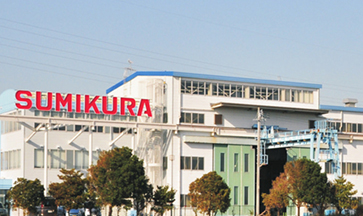
ADRESSE
487-3, Sanshincho, Chuoku, Hamamatsu, Shizuoka, Japan
 Lokaler Markt in Japan:+81 53-425-5331
Fabrik in China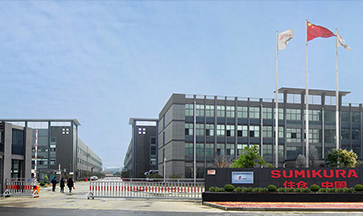
ADRESSE
265 Yixian Road, Deqing, Zhejiang, China
Überseemarkt :+86 572-883-2016



